
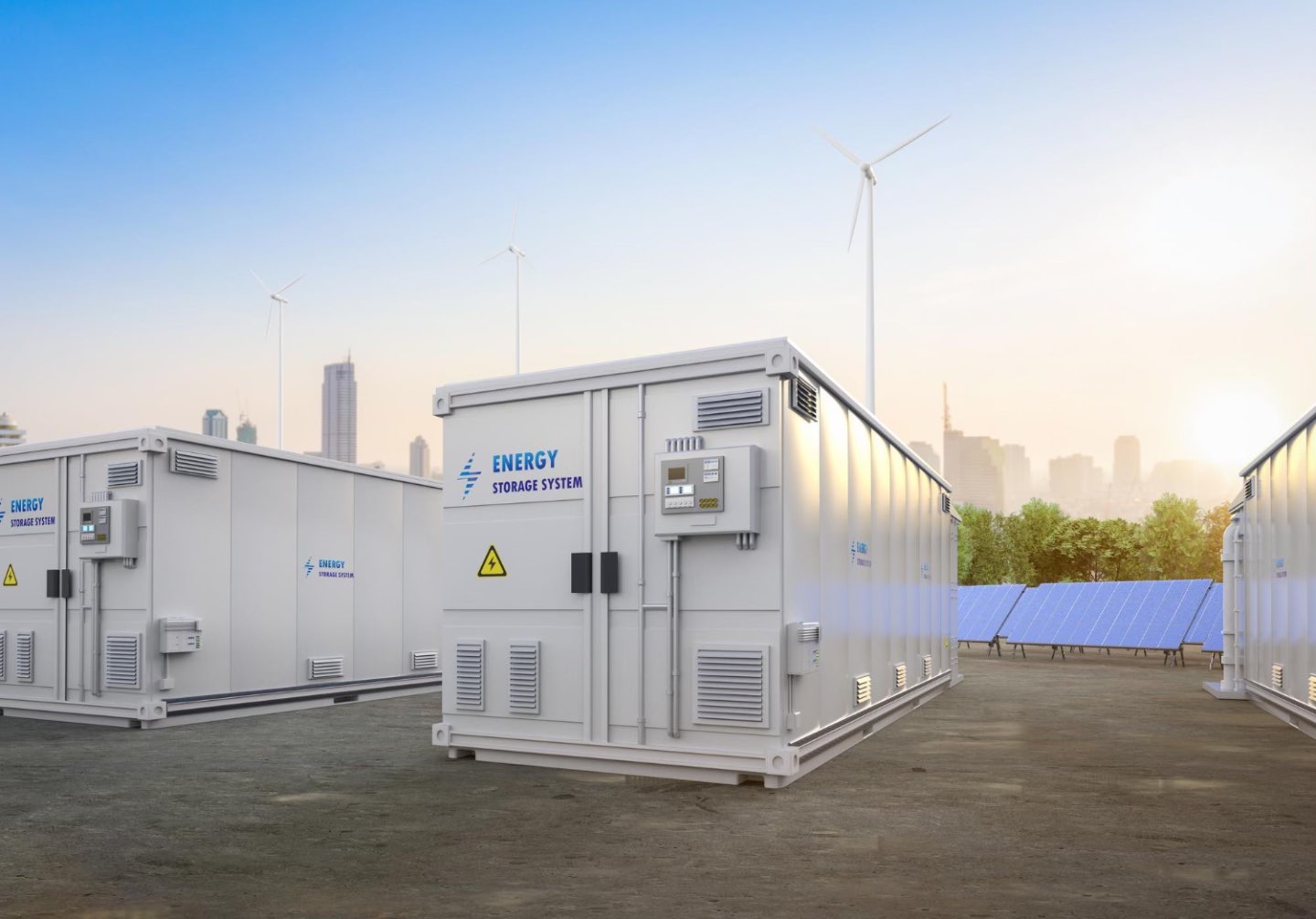
What are the most important risks to cover for a battery energy storage system (BESS) in 2026?

Battery energy storage systems, known as BESS (Battery Energy Storage System), have become an increasingly common component in renewable energy projects. They allow the storage of energy produced when demand is low and its delivery to the grid when consumption increases. This role contributes to balancing the electricity grid and using the energy produced more efficiently.
A BESS system brings together batteries, electrical equipment, cooling systems, monitoring software and safety components. The complexity of these installations means that risks are not limited to damage to the equipment. An incident can affect the continuity of operations, the revenues generated by the project and the relationship with financiers or contractual partners.
If you are developing, building or operating a project that includes a BESS system, it is useful to understand what risks can arise at each stage, from transportation and installation to day-to-day operation. A correct assessment of these risks helps you choose the right protection measures and limit the impact of an unforeseen event.
In this process, the insurance program is one of the components of risk management. In 2026, Leader Team Broker offers insurance solutions dedicated to renewable energy projects and BESS systems, both for the construction and operation periods. Below you will find out which are the most important risks worth considering and how they can be covered through a insurance for BESS storage systems structure adapted to your project.
What risks must be covered in 2026 to protect your investment in a BESS system?
A BESS system is not just about batteries. This includes battery modules, inverters, transformers, cooling systems, electrical equipment, control software and a battery management system, called BMS (Battery Management System). The BMS constantly monitors parameters such as temperature, voltage and state of charge of each battery, in order to prevent operation outside safe limits.
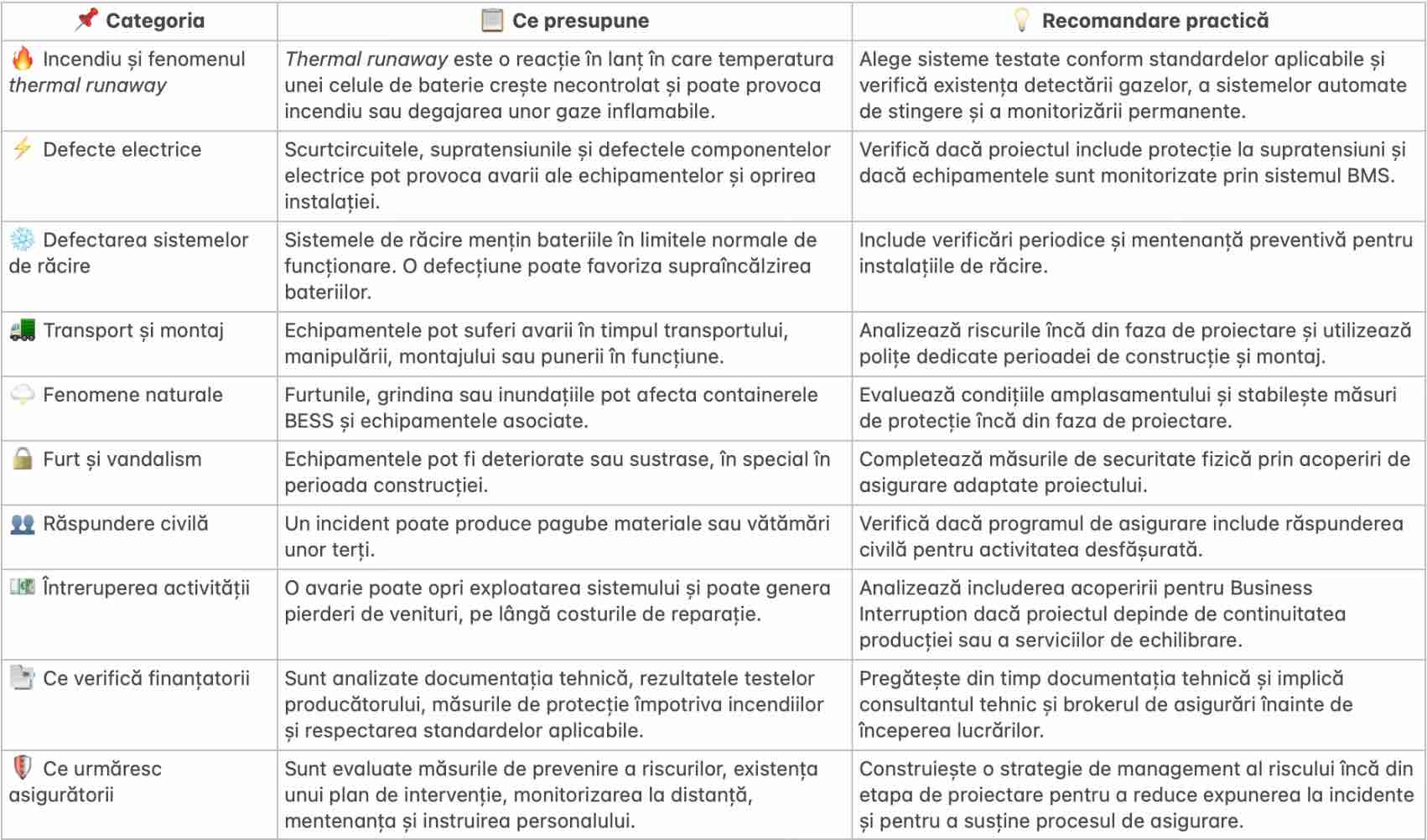
The most well-known risk is the phenomenon called thermal runaway. This describes a chain reaction in which the temperature of a cell increases uncontrollably and can affect neighboring cells. If the phenomenon is not limited, it can lead to fire or the release of flammable gases. For this reason, technical standards pay increasing attention to testing the behavior of systems in such situations.
In addition to fire, in 2026 an insurance program also takes into account other risk categories:
- short circuits and electrical faults;
- overvoltages caused by atmospheric discharges;
- failure of cooling systems;
- damages caused during transport or assembly;
- natural phenomena such as storms, hail or floods;
- theft and vandalism;
- civil liability for damages caused to third parties;
- loss of income in the event of interruption of exploitation.
A simple example shows why this approach is necessary. If an inverter fails and the system has to be shut down for a few weeks, the cost is not limited to replacing the equipment. The owner may lose revenue from the energy that can no longer be delivered or from the contracted balancing services. That is why many insurance programs also include coverage for business interruption, known as Business Interruption.
If you are developing a BESS project, it is advisable to identify the risks as early as the design phase. Check whether the manufacturer can demonstrate that the system has been tested according to applicable standards and whether the design includes measures such as gas detection, automatic extinguishing systems, permanent monitoring and safety distances between containers. These elements reduce the likelihood of an incident and are analyzed by both financiers and insurers.
What are financiers and investors looking for in 2026 before commissioning a BESS project?
A BESS project involves a high investment and involves technical, operational and financial risks. For this reason, financiers and investors in 2026 are looking at more than just the system’s expected performance. They want to understand whether the project can operate safely in the long term and whether there are measures in place to limit losses in the event of an incident.
One of the first checks is the technical documentation. This includes the plant design, equipment selection, fire protection systems, and the results of manufacturer tests. For example, the UL 9540A standard is used to evaluate how a BESS system reacts in the event of a thermal runaway. The results of these tests help designers and insurers determine the necessary protective measures for each installation.
Another aspect to be monitored is compliance with applicable standards. For example, NFPA 855 provides recommendations for the installation of energy storage systems, including requirements for location, ventilation, fire detection, and safety distances. Compliance with these requirements can influence both the licensing process and the conditions under which an insurance policy can be concluded.
Financiers also analyze how risks will be managed during construction and after commissioning. In practice, this means checking the existence of policies adapted to each stage of the project, maintenance contracts and a clear plan for intervention in the event of a breakdown. Remote monitoring procedures, staff training and a preventive maintenance program are also evaluated.
If you are preparing a BESS project for financing, it is recommended to involve both the technical consultant and the insurance broker from the design phase. An analysis carried out before the start of the works can identify risks that could subsequently generate additional costs or delays. In many cases, complete documentation and a clear risk management strategy contribute to a more efficient evaluation process carried out by financiers and insurers.
Checklist with risk categories and practical recommendations for BESS systems in 2026
 How can Leader Team Broker help you build an insurance program for a BESS project in 2026?
A BESS project involves different risks depending on the stage it is in. Equipment damage or installation errors may occur during transportation and assembly. After commissioning, the focus shifts to protecting the investment against fire, hardware failure, cyber incidents and business interruption. For this reason, the insurance program must be built based on the specifics of each project, not based on a standard policy.
In 2026, Leader Team Broker specializes in insurance solutions for renewable energy projects, including photovoltaic parks, wind farms and battery energy storage systems (BESS). The company works with both local insurers and syndicates within Lloyd’s of London and manages over 600 specialized products for complex risks.
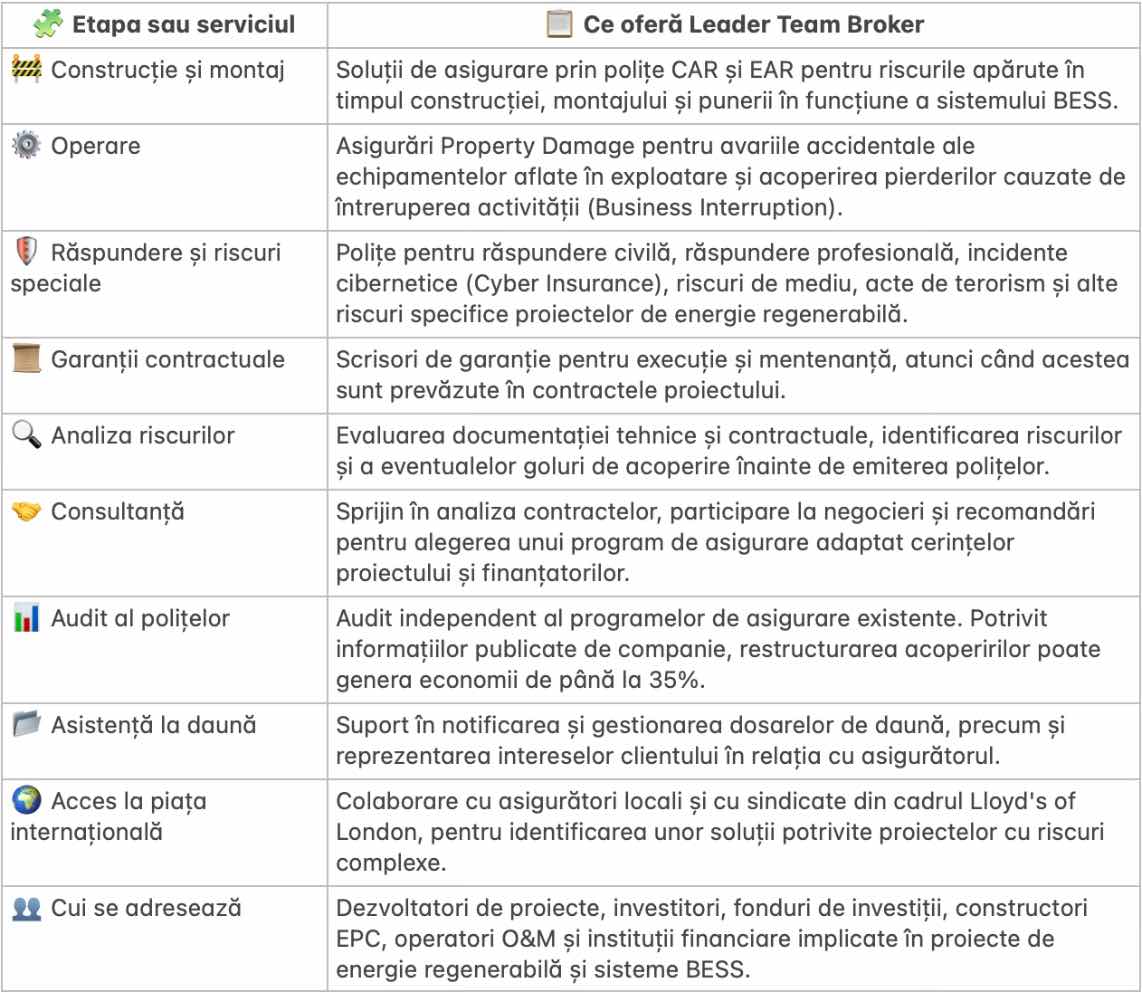
Depending on the project stage, the insurance program may include:
- CAR and EAR policies for the construction, assembly and commissioning period;
- Property Damage insurance for damage to equipment in operation;
- coverage of losses generated by business interruption;
- civil liability and professional liability insurance;
- Cyber Insurance policies for cyber incidents and computer attacks on control systems;
- coverage of environmental risks, acts of terrorism and other risks specific to energy projects;
- letters of guarantee for execution and maintenance, when these are required by the contract.
In addition to identifying insurance solutions, Leader Team Broker provides consulting throughout the entire project. Services include analyzing contract documentation, participating in negotiations, verifying existing policies, and identifying potential coverage gaps. The company also conducts independent audits of insurance programs, which, according to information published on its website, can lead to savings of up to 35% by restructuring existing coverage.
Another advantage is the involvement of the team even after the policies are issued. Leader Team Broker provides assistance in managing claim files and represents the client’s interests in the relationship with the insurer. For developers, investors, EPC builders, O&M operators and financial institutions, this approach means access to technical and legal advice, as well as an insurance program tailored to the project requirements and the conditions imposed by the financiers.
 Finally, BESS systems play an increasingly important role in the development of renewable energy projects from 2026, but their performance also depends on how the associated risks are managed. Fires, equipment failures, cyber incidents or business interruptions can generate high costs and affect the continuity of exploitation if they are not taken into account from the design phase.
A risk management strategy includes both technical prevention measures and an insurance program adapted to the characteristics of the project. Analyzing risks before starting work and choosing appropriate coverage for each stage, from construction to operation, helps protect the investment and reduce the financial impact of unforeseen events.
If you are developing a photovoltaic park, a wind farm or a project that includes a BESS system, you can call on the specialists of Leader Team Broker for a risk analysis and to identify the appropriate insurance solutions for BESS storage systems. Our team offers dedicated consultancy, customized insurance programs and support throughout the entire project, including in the management of potential damages. This way, you will be able to build a protection program adapted to the investment requirements and the conditions imposed by the financiers.
Frequently asked questions about the risks covered by insurance for BESS systems from Leader Team Broker in 2026
What types of projects can Leader Team Broker insure in the field of renewable energy?
Leader Team Broker offers insurance solutions for photovoltaic parks, wind farms and battery energy storage systems (BESS). The services are dedicated to developers, investors, EPC builders, O&M operators and financial institutions. The insurance program can be adapted to both projects in the development or construction phase and those already in operation, depending on the specific risks and contractual requirements.
What risks can Leader Team Broker cover for a BESS system?
Depending on the project characteristics and the terms of the policy, the insurance program may include coverage for risks such as fire, accidental equipment damage, electrical faults, civil liability, business interruption, cyber incidents and certain environmental risks. For projects under construction, risks associated with transportation, assembly and commissioning of the facilities may also be included.
Why is it recommended to contact Leader Team Broker before starting a BESS project?
Involving an insurance broker from the design stage allows for the identification of risks before they generate additional costs. Leader Team Broker analyzes the technical and contractual documentation, checks for any coverage gaps and proposes solutions adapted to the project. This process can contribute to meeting the requirements imposed by investors and financiers and to choosing a suitable insurance structure.
How does Leader Team Broker support me if a claim occurs?
In addition to brokering insurance policies, Leader Team Broker provides assistance in managing claim files. The team analyzes the necessary documents, communicates with the insurer and monitors the progress of the compensation process. This support can reduce the time required to resolve the file and helps beneficiaries more easily manage the administrative procedures associated with a claim.
How is Leader Team Broker different from a general insurance broker?
Leader Team Broker specializes in risk management and insurance solutions for complex projects, including in the field of renewable energy. The company collaborates with both local insurers and Lloyd’s of London and offers consultancy on risk analysis, contract evaluation, audit of existing policies and claims management. The approach aims to build an insurance program adapted to each project, not just identify an available policy.